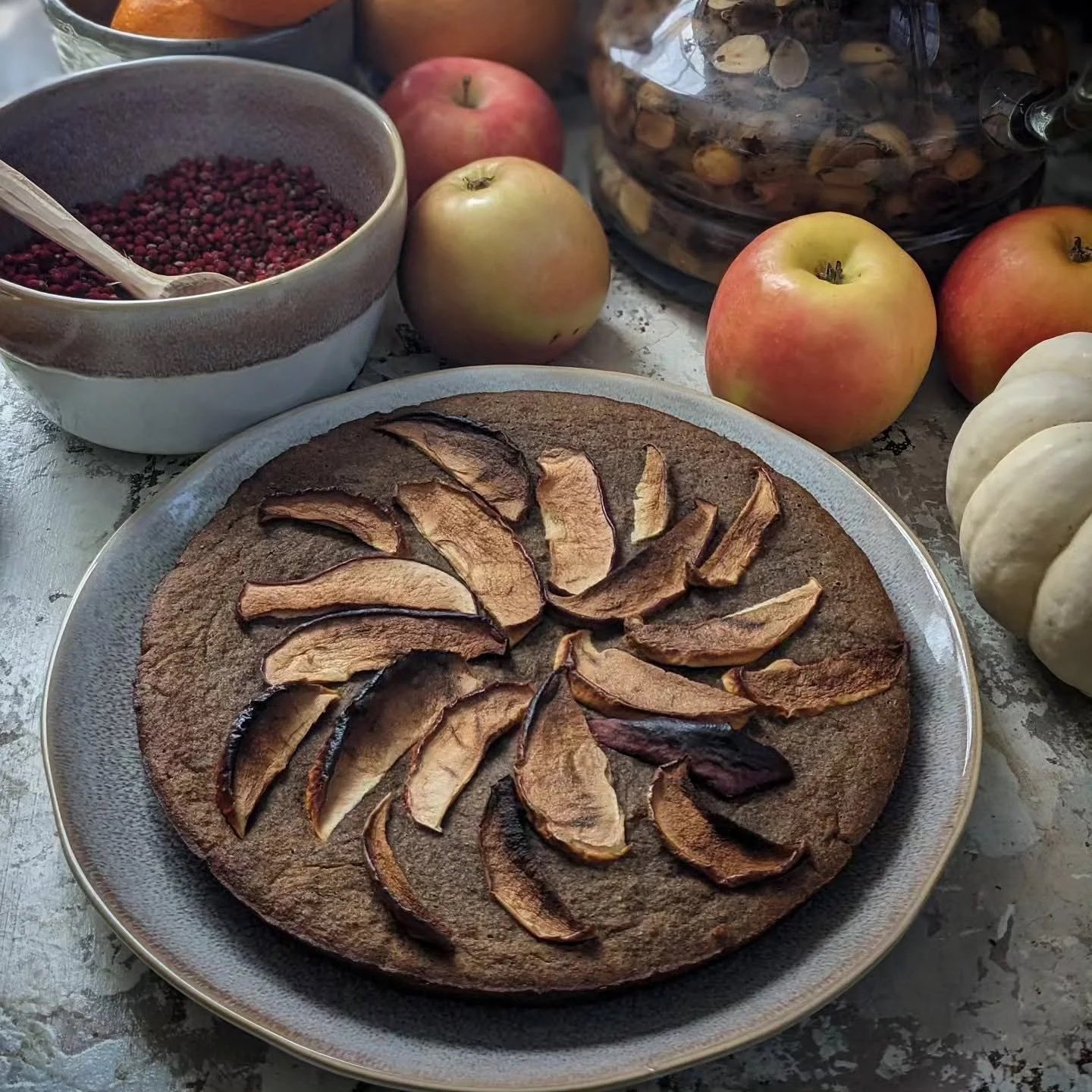
Acorn cake with roasted apples made by the author.
I notice today, it feels almost inappropriate to look to the past while so much is needed here and now to sustain us. I’m often left wondering where is my work is in this world? Where can I be of service? I study, practice and share about the historical context of plants in Appalachia for a few different reasons, and I find that as an Appalachian citizen, folk herbalist, craftswoman and historian of plants, I feel the need to ask myself, why do what I do and to what goal am I doing it?
Ethnobotany is defined as, "the study of the interactions and relationships of people and plants over time and space (1).” While our world experiences immense leaps in technological advances, we still find ourselves standing on the same soil our collective ancestors have always trod upon. Despite the fact that most children today in North America can identify more logos than plant or animal species from their bioregion does not mean that we are not dependent on them.
Humans and plants have a unique evolutionary history. Often mutualistic, we cannot survive without plants in their various forms, wild and cultivated. Most of them, however, would happily continue growing without meddling from humans. But where does ethnobotany fit in today’s society? Is it still a relevant field of study?
The history of ethnobotany is deeply extractive and colonial, yet I see that it can be reclaimed and refined to both preserve botanical information, make it more readily accessible to those who it has been stolen or removed from while continuing to evolve and grow the relationships we have with plants to address healthcare and food needs we collectively share by practicing the things we learn. It is also an important part of herbalism I often see missing which helps to ensure we do not teach about plants without the important cultural contexts of how we know the things we do about them and who originally held deep spiritual and/or cultural connections and what needs those people have today.
It’s important to read criticism and critiques about our fields of work and study, one in particular I find a lot of meaning in is Elaine Ayers piece, “The Legacies of Spruce, Schultes, and Colonialism in Amazonian Ethnobotany”:
“…ethnobotany legitimized knowledge extraction under the banner of science and environmental conservation and reaffirmed hero-worship and myth-making about the region [the Amazon] in shockingly linear ways. How can we understand the history and practice of ethnobotany without centering the stories of a handful of white men—seemingly the opposite goal of the field itself? Can ethnobotany exist at all without its colonial past, given the power dynamics still deeply at work?”
There are far more intelligent essays on the subject of the history of ethnobotany and its deep problems than mine here, but for our purposes it is imperative to understand that white supremacist colonial beliefs of manifest destiny and other similar ideologies allowed for cultural mining largely without respect, context or mutual reciprocity for the observed culture. It yields archives full of culture’s botanical information that many of their descendants struggle to gain access to. It yields new medicines patented and profited off of by corporations while the peoples who created these plant relationships are barred from their traditional lands or common spaces where they can forage and grow plants. I encourage you to read more about the importance of ethnobotany with Traditional Ecological Knowledge at the forefront.
Here is a small list below.Well grounded: Indigenous Peoples' knowledge, ethnobiology and sustainability
My friend Minister Gigi’s amazing Patreon incubator for Affrilachian Herbalism
Ethnobotany Books by Indigenous Authors
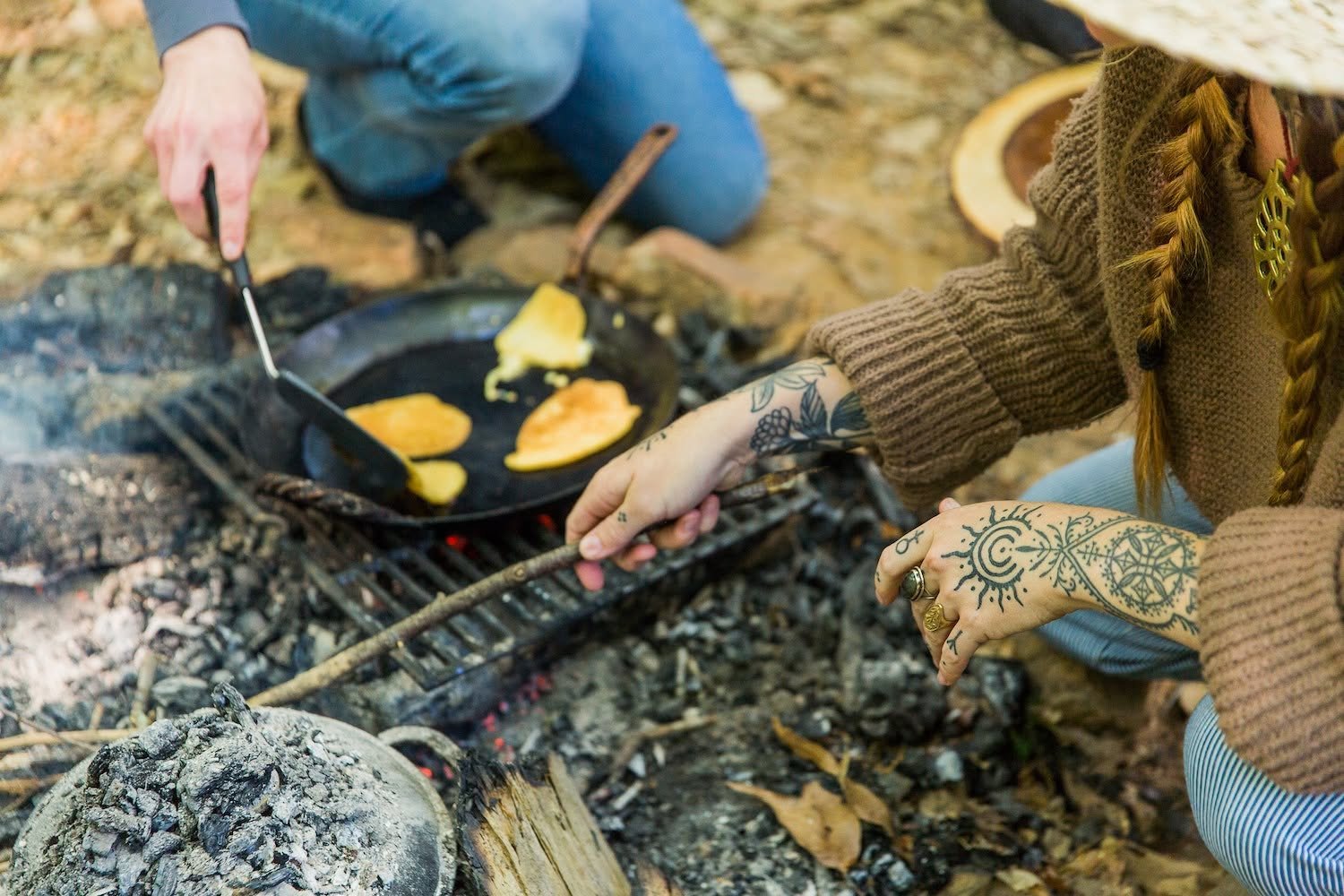
Studying the history of how certain plants have been related with by humans does not and should not always be from an out-group person looking into a group that they have no ancestral connection to. It’s important to know whose special plants you live near for those of us living outside our lands of origin, however learning about the cultural significance, medicine and spiritual practices of your own ancestor’s plants is also deeply healing. It can help give us empathy and a grounded sense of self with which to be better allies to our relatives of the Global Majority as well as Original Peoples of Turtle Island. When our own cup is full, it is easier not to take long drinks from other’s cups.
I believe that the study of people and plant's interactions is relevant today, especially in a biologically and culturally diverse place such as Appalachia. It becomes abundantly clear the deeper one looks into our current global ecological crisis: humankind is rapidly losing their connection to the natural world, and with it, the plant kingdom. This bodes poorly not only for humans and their collective botanical knowledge, but also for the ecosystems that support these plants which they are no longer deem valuable. Appalachia, as a region of colonization, extraction and ecological devastation, is especially vulnerable to losing the rich plant knowledge bases which were born out of a unique mixture of the cultures.
Ethnobotany also provides a support to the continued preservation of ecological biodiversity. Only twelve plant species make up over 75 % of our entire food supply, and only fifteen mammal and bird species make up more than ninety percent of global domestic livestock production. Original Peoples in North America gathered and used almost 1800 different plants, algae, lichens and fungi. Genetic biodiversity helps to ameliorate against crop losses and disease and pest epidemics.
It also enhances the human diet and promotes health, as a multitude of plant foods offer different minerals and nutrient profiles rather than relying on a few simple carbohydrate grain foods to support a population. By preserving and supporting the active study and living practice of ethnobotany, especially with invasive and abundant plants, we can help to make more nutritious foods and effective, accessible medicines more widely available.
Since its inception at the turn of the century, ethnobotany has largely been concerned with categorizing and listing useful plants in far away lands, searching for medicines and goods for profit and pleasure. Most of this study has been geared towards tropical nations and far away lands, but while Appalachia is one of the most biodiverse areas in the United States due to its biogeography, plant and human migration patterns, and abundance of microhabitats, it has had little focus on its botanical traditions aside from economically valuable herbs like ginseng and goldenseal. It also boasts a huge selection of edible and medicinal wild plants, with a large population of invasive and naturalized non-native plants that are deeply useful and special to their respective homelands as well.
The region also boasts a large body of medicinal plants knowledge and tradition that preserves a mix of Original Peoples, African and European plants and healing modalities. Bioregional ethnobotany, a body of knowledge firmly grounded in a certain ecosystem or region, provides local solutions for the struggles that are being felt throughout the world through supporting the protection, growth, and use of plants from one’s immediate surroundings.
As climate change and careless extractive practices such as mountain top removal, continue to alter the surface of our region, learning about the plants and their histories in our biome can be a meaningful step towards fostering a feeling of value and identity with plants. This shared bioregional identity can be a powerful tool in promoting care and protection around our region all the while preserving and promoting Traditional Ecological Knowledge and our complex history through story, recipes, language, herbal medicines and craft.
Ethnobotany can also fight against the white-washing of Original People’s botanical knowledge and Appalachian Black folk’s plant ways that are often excluded, downplayed or undermined in favor of European plant medicine. Ethnobotany is still a powerful tool in re-engaging with the natural world we are a part of. We are in deep requirement of relating with in a way that is historically honest, ecologically mindful and culturally sensitive to the best of our abilities.
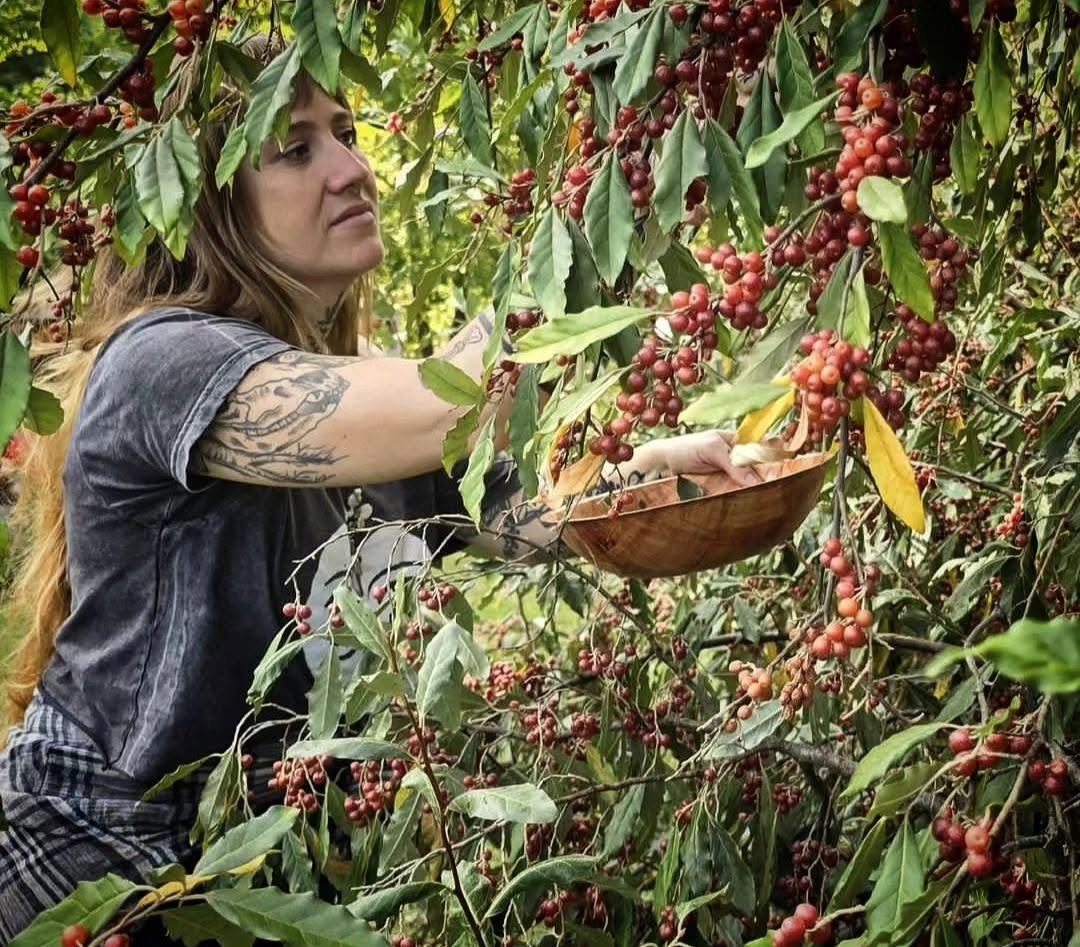
The author picks invasive autumn olive (Eleagnus umbellata) berries.
My personal life has folded the study of the history of plants into itself in many ways. It looks like season plant harvests like Autumn Olive and acorns, mugwort and chickweed, and plants that are abundant and non-native around me. It involves building a spiritual practice grounded in my own ancestry, which for me is Scottish, English and German largely.
As a practitioner of Braucherei or Pennsylvania German folk magic and medicine as well as Appalachian folk medicine, I find that understanding the histories of the plants I work with that are native to my homelands, and the ones that are native to this land or the many other nations throughout the world that now populate the hillsides around me, is imperative to more justly working with the plants. Choosing to focus my medicine making and wild food harvests on the plants I can grow, the invasive and the abundant is important to avoid damaging rare, delicate native plant populations.
It also helps me hold space for my kin of Indigenous and Black communities by naming what plant practices we have learned from them and how imperative it is for us to act towards restoring access to wild spaces to peoples whose plant knowledge we are directing benefiting from. It helps me to connect and make more easily available the information that many of us crave by educating myself on what plants are important in these communities to help people find them, learn them and protect them.
What organizations are working to connect Indigenous youth with wild foods and ethnobotanical learning in your area? What plants are in your yard that have become sacred supports to the Black communities around you? What mutual aid group are helping out in underserved communities connecting people with plants? There are many amazing people working towards this you can donate to, repatriate knowledge and skills to and more.
Some examples from my community and beyond…
NORTH AMERICAN TRADITIONAL INDIGENOUS FOOD SYSTEMS
Bigwitch Indian Wisdom Initiative (one of our locale organizations)
Peace Gardens and Market in Asheville, NC
I hope this little meander has helped inspire you to see the value in learning the histories of the plants around you, whether you live in Appalachia or not. I hope when you hold rabbit tobacco, mugwort or a handful of spicebush berries you think of all the hands that have held them before you. The hands that allowed you to know their magic, food and medicine. For me, knowing the stories of the plants connects me in time and space to the land I am a guest on and helps me find meaning and purpose in how I relate to the wild world around me.
I hope that you will join me in the fight alongside the peoples who have lost access to ancestral lands, who have been stolen away from ancestral practices, the working class and the poor who are now more than even clamoring to reclaim, recreate, and rebirth the deep abiding relationships we all once shared with our homes in nature.
We are a part of nature, and it is up to us to meld the history, science, and our hearts to try and make sense of it all while working alongside plants and their people today. I hope ethnobotany will continue to transform as we do into something that builds rather than destroys, somethings that fosters connection rather than hoarding, and something that inspires meaning instead of millionaires.
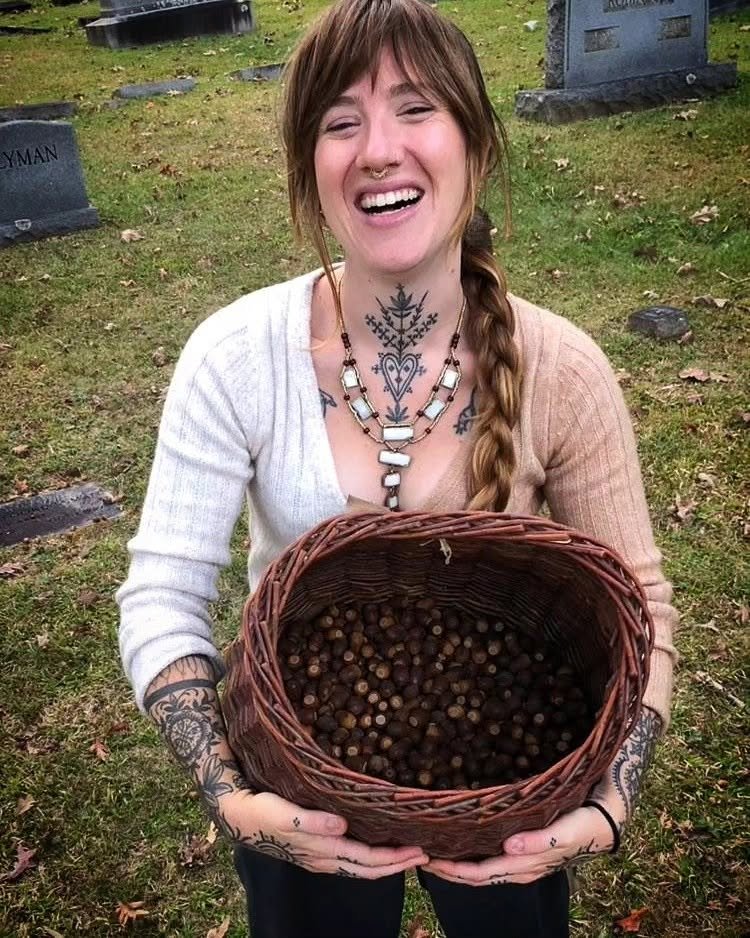
The author with a big basket of acorns!
Works Cited
Loucks, C., D. Olson, E. Dinerstein, A. Weakley, R. Noss, J. Stritholt, and K. Wolfe. “Appalachian Blue Ridge Forests.” WorldWildlife.org. World Wildlife Fund, n.d. Web. 21 Oct. 2015.
Pardo-de-Santayana, Manuel, and Manuel J Macía. "Biodiversity: The Benefits Of Traditional Knowledge." Nature 518.7540 (2015): 487-488. MEDLINE. Web. 21 Oct. 2015.
Penafiel, Daniela, et al. “A Systematic Review On The Contributions Of Edible Plant And Animal Biodiversity To Human Diets.” Ecohealth 8.3 (2011): 381-399. Environment Complete. Web. 21 Oct. 2015.
(1). Presidents and Fellows of Harvard College. “Biodiversity and Food Production.” Biodiversity and Food Production. The Center for Health and the Global Environment, n.d. Web. 21 Oct. 2015.
Turner, Nancy Jean, and Patrick von Aderkas. “Sustained By First Nations: European Newcomers’ Use Of Indigenous Plant Foods In Temperate North America.” Acta Societatis Botanicorum Poloniae 81.4 (2012): 295-315. Academic Search Complete. Web. 22 Oct. 2015.
