Appalachian Folk Magic and Medicine
What is Appalachian folk magic? What is Appalachia? What is NOT Appalachian? These are all important questions, and ones with many answers. It’s important to consider what a tradition really IS before pursuing, studying or practicing any bioregional folk way, especially those of diverse cultural origins like that of the Appalachian region. It’s important to me to be clear about how I understand Appalachia and its formation while teaching classes on this historical medicine traditions and folk magical lore.
I also write this in hopes of furthering the conversations about what makes Appalachia special, worth protecting and a place to treasure, warts and all. I also write this so that those who would study with me or read my books understand where I am coming from and my understanding of the region I hold dear above all things and my relationship to it. If you’ve never met me, hello, I’m Rebecca Beyer (she/her).
I have lived in Western North Carolina for 16 years and have dedicated myself to its many beings and folk ways through living close to the land while learning alongside many different types of people who make up modern Appalachia and studying it closely. While I was born in what is considered the northernmost point of coal Appalachia in Pittsburgh, Pennsylvania, so I speak on this matter as an outsider. I was not one raised within it, nor inside any cultural group aside from WASP America.
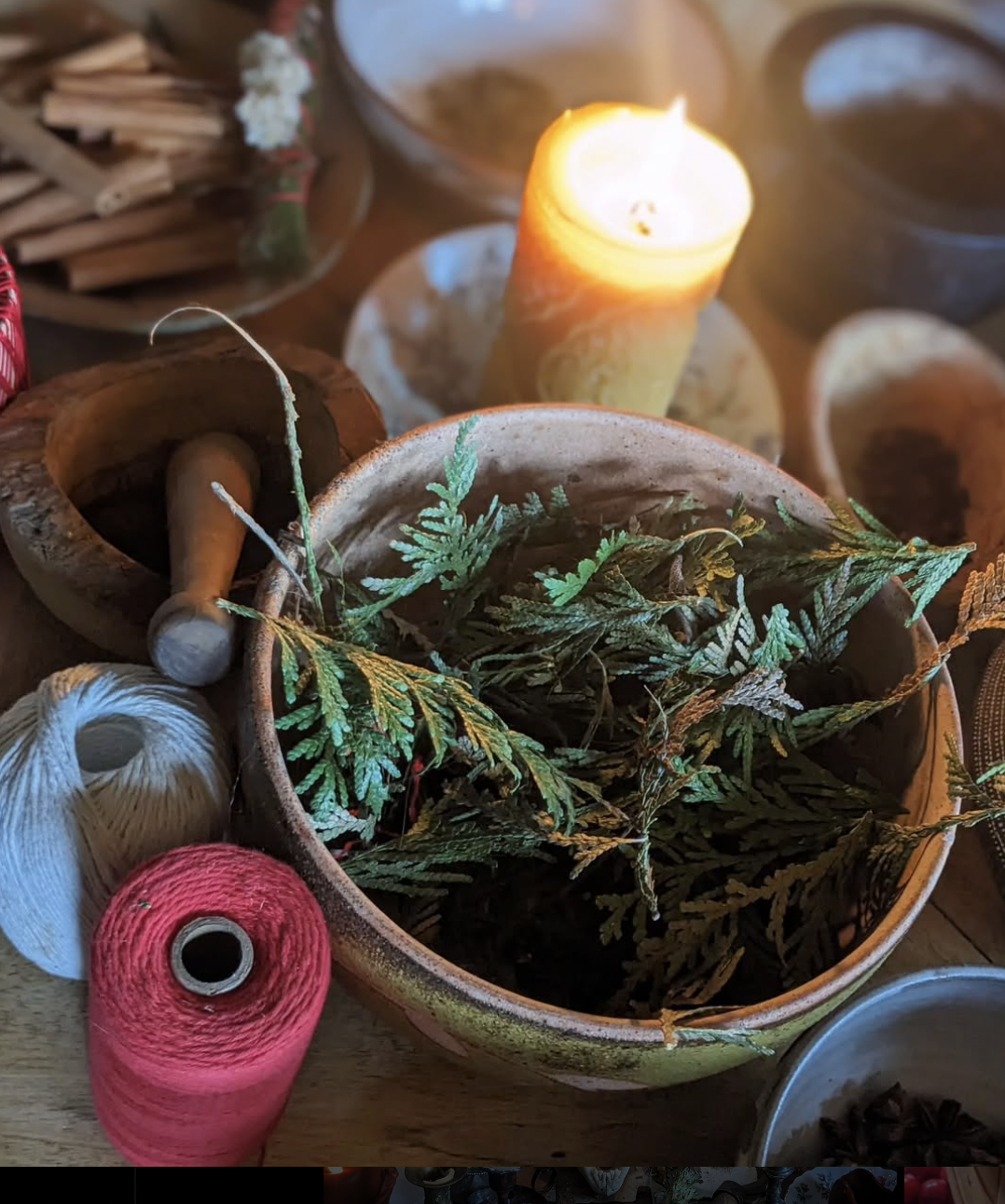
I was raised with no folk medicine, plant knowledge or craft and moved 9 times as a young person throughout the Mid-Atlantic (I even lived in California for a few years as a very young child.) I started practicing Wicca at 12 through my Unitarian Universalist church and became obsessed with living history after witnessing the Amish folks that lived near me in Pennsylvania. I lived on farms on an off as a child from 8 onwards and knew that rural life was the one for me, one close to the earth.
The Delaware water gap and the woods of eastern Pennsylvania have mostly defined my lived experience of relationship to nature before I moved out at 18, on Lenapehoking (land of the Lenni-Lenape). There is some homecoming in my move to Western North Carolina though, as my great grandmother was born in the mountains of Brevard, North Carolina, and before her, most of my mother’s side came from eastern Kentucky.
That’s a little about me, but now on to Appalachia…
The Appalachian Regional Commission defines Appalachia as,
“a 205,000-square-mile region that follows the spine of the Appalachian Mountains from southern New York to northern Mississippi. It includes all of West Virginia and parts of 12 other states: Alabama, Georgia, Kentucky, Maryland, Mississippi, New York, North Carolina, Ohio, Pennsylvania, South Carolina, Tennessee, and Virginia”.
Despite these definitions, there perhaps exists two Appalachia’s however. In my opinion, there is the physical mountain range mentioned above , and there is also the social/cultural idea of Appalachia. Despite it being difficult to define exactly where it is physically due to the Appalachian Regional Commissions definitions versus indwellers definitions, I generally speak about the mountain South, from West Virginia to Northern Alabama, that has shared foodways, cultural influences, religion, language and folk arts. I study plants so when I teach Appalachian folk classes I am largely speaking for the Southern Appalachian bioregion from West Virginia to Northern Alabama because of their shared and interrelated flora and fauna.
My first focused introduction to Appalachian folkways was through ballads and music alongside my best and dearest friend: Saro Lynch Thomason of East Tennessee. We met back in 2005 at Bard College in the woods of Upstate New York as 18 year olds. She introduced me to the songs of her region as well as the struggle for Mountain Justice and the issues of coal mining. After the sad sale of our family farm in eastern Pennsylvania, where I had intended to move and farm after graduating, I instead moved here in 2010 to be with Saro, my most beloved and closest person after finding myself afloat in the world.
I finished my Plant and Soil Science degree in Agroecology from the University of Vermont in 2010, and then promptly I moved to an area about 30 minutes outside of Asheville called Gerton where I worked on a small farm. I was deeply interested in localized, bioregional lifeways, petroleum free farming with horse power and historical folk medicine and endeavored if I am to live in a place I needed to devote myself to studying its history, foodways, ecology and more.
It was here in WNC I met Byron Ballard, our village witch of Asheville, in 2013 and took a class with her on Appalachia folk magic. She was my first teacher on the subject that was not a book. She has gone on to be a friend and mentor throughout my time here, supporting me through difficult illness and offering advice and support through my many joys and sorrows. I am deeply grateful for her. The services she provides to our community are very special, through her work with Mother Grove as well as a teacher, writer and so much more. She introduced me to the term Appalachian citizen which I wear proudly as a transplant to these mountains.
She not only taught me through classes and her books about what Appalachian folk magic feels like, she also explained to me through conversation about the continuing struggle with stereotypes and misuse of the word hillbilly and the like here in the mountains she grew up in. Conversations with her and my many other friends who are from this region have been the most defining to me in my quest to understand what people feel about being Appalachian, what they feel Appalachian-ness is and what others outside of Appalachia think of the region and its inhabitants. I turned from studying general farming and western herbalism, to digging into the study of Appalachian folk medicine and magic.
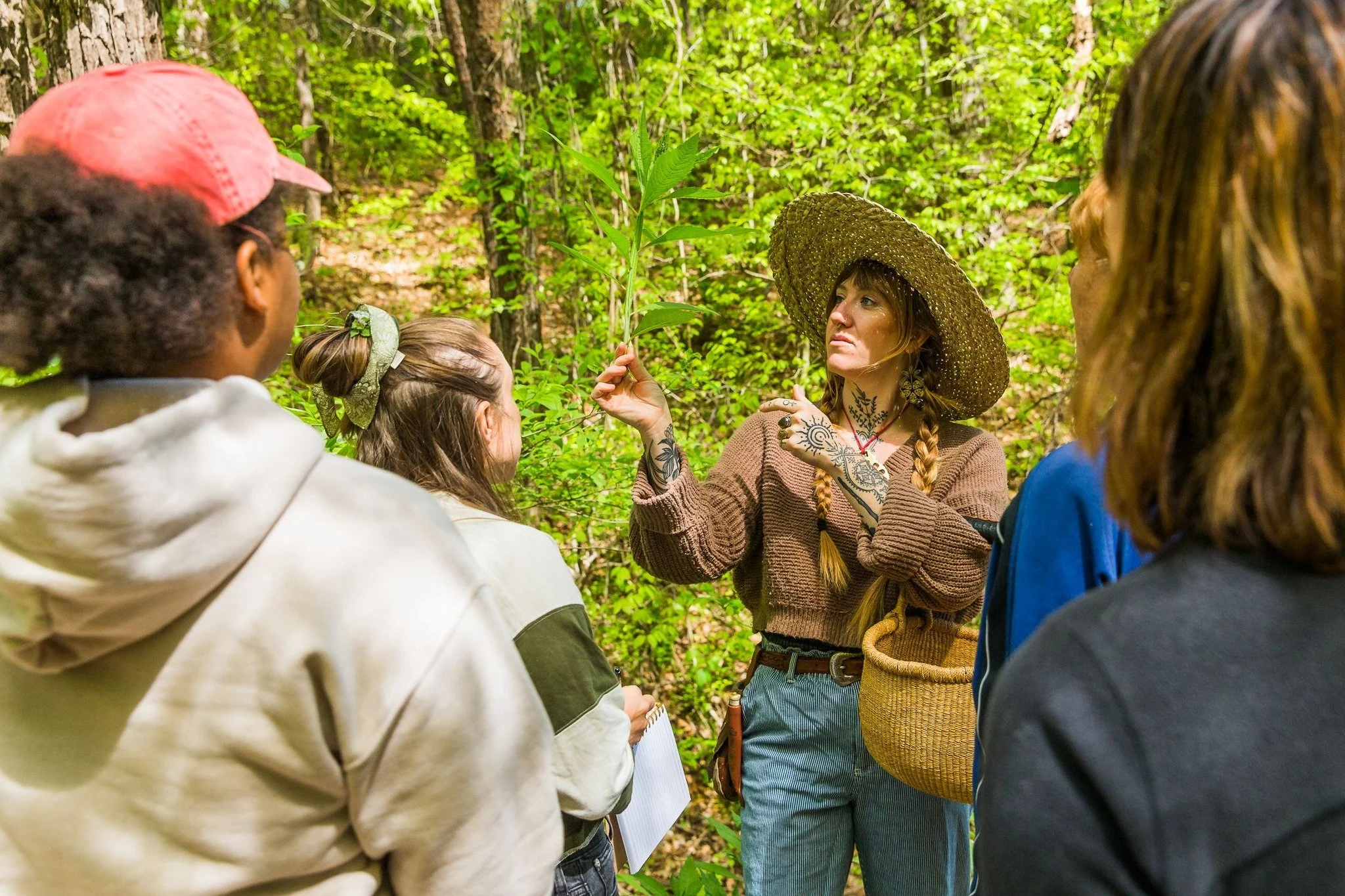
I live very rurally off grid in Marshall, North Carolina. If you ask my neighbors where they live, some of whom have been here for 5 generations or more, they surely will not answer, “Appalachia.” Most of my community refer to themselves by the name of their immediate locale, not by the name of the mountain region. There is little conversation about the “right way” to pronounce it, (“throw an Apple-at-cha” vs “Appa-lay-sha” like they say it where I am from), and more just trying to make it in this world. Appalachian-ness as an identity began to form a long time ago, but it is always growing and changing just as its people, land and folkways are. Where I live, the way young people talk about Appalachia is markedly different than the way elders do. Have you noticed that in your community?
In their essay, “The Uses and Misuses of Appalachian Culture”, Phillip J. Obermiller, and Michael E. Maloney talk about the troubles around attempting to define a unified culture:
“Fredrik Barth criticized all attempts to create a homogenized, unitary “culture” for any group. Those who do ‘silently reaffirm the assumption of pervasive logical coherence in culture without exploring its extent and character, [while leaving] the axioms of received wisdom on ‘culture’ undisturbed’ (Barth 1989, 122). The message here is that trying to delineate a culture often tells us more about the biases of the observer than the nature of the people being observed.”
I have lived in many different places since moving here to the mountains and have lived in tents, sheds, punk houses, and even a bus while dedicating myself to learning the plants through classes, plant walks, books, conversations and conferences since 2010. I have immersed myself in learning the skills needed to hunt, fish, gather and grow food and medicine grounded in this place and time. I have lived on the edges of the Anarcho-primitivist subculture for many years and through this lens have matured my understanding of living on land and what it means, especially here. It is something I am always thinking about and wondering over.
In 2015, I pursued a Masters in Appalachian Studies from Appalachian State University, and it is interesting to note that when I began my program, our head of department told us that we should prepare ourselves to be discriminated against for having gone to a university bearing the name of Appalachian State, as well as the double whammy of having a secondary degree in such a topic. While I personally never experienced this, I understood why this was, and would go on to deepen and broaden my understanding of the negative stereotypes of what makes something Appalachian. I focused on the history of plant uses in Southern Appalachia, or Appalachian Ethnobotany.
This is all to explain how I came to this place and my efforts in attempting to know it. I come not to cosplay rural poverty or an idealized Appalachian self-sufficient woodsperson stereotype, but in a quest to live spiritually closely to nature in a way that causes least harm, while celebrating the seasons and acknowledging history of the land I am a guest on as well as my own ancestor’s folkways. Also, I come at it from a place of pleasure. I love learning about history, foodways, folkmagic and craft, and I derive a deep sense of joy from these pursuits. I tend to avoid and feel disinterested in New Age magical concepts and prefer historically founded traditions as they help me feel more grounded in my own ancestry as well as in justice spaces with the ancestors of those mine have caused harm to. I like to know where people learned things from, and love when people acknowledge their teachers.
But all my personal blathering aside, how did this region become what it is? Why are things like stumpwater, salt and red pepper so important in our charms? There isn’t one clean answer, and I am certainly not the one to give it. It has many facets, and I can only see so many from my vantage point. I would still like to try and follow the thread of what made Appalachia historically and how one can feel its edges when learning about folk magic, food, craft and medicineways in this special place. I also want to explain this so that those taking classes with me understand my background and where I am coming from in my teaching and how we can acknowledge where different practices originated in our study of Appalachian folk magic and medicine.
A region defined…
I have read and heard it said many times that it is difficult to see where, what and how different cultural groups have contributed to the lore of the region. However, by studying the ethnobotany, history and ecology of a place, we are able to often find the threads home to the land of origins of different beliefs. When we familiarize ourselves with all the people’s folkways, we can start to tease out the different cultural contributions. It is difficult, because like all folkways, Appalachian folk magic is an unofficial system that does not have a set doctrine or dogma.
Historically, Appalachia is made from three predominant cultural groups, each from very different parts of the world. It is much like a stool with three legs: one Indigenous, one African and the other European, each containing within them a myriad of unique specific nation’s ways. These cultural groups came together in this particular, mountainous topography and climate to form the bones of the healing and magical methods employed within it.
First, there was Indigenous Appalachia for thousands of years. Diverse languages, cultures, religions, foodways and folk healing methods dotted hollers and hilltops of the well populated Mountain South. Yuchi, Cherokee, Creek, Shawnee, Choctaw, Mingo, Catawba and many more people had large communities throughout the region. The Ani'-Yun'wiya', (Cherokee) alone have been in this region since 8000 BCE.
The European story begins in the 1500’s with the arrival of the Spanish and the people from Western and Central Africa they had enslaved in their quest to expand their riches. The Spanish used Roman humoral medicine combined with Christian ideologies and eventually melded them with Indigenous beliefs over time. These were of course also influenced by these largely West and Central enslaved Africans who of course had their own healing traditions and worldviews.
Scotch-Irish and British colonists and their contributions to Appalachian culture are often solely mentioned in the conversations about the medicine, folklore and music of this area, but it was not until the 18th and 19th centuries that they arrived in Appalachia and began the process of cultural exchange and assimilation with their own healing methods, as in the case with astrology, biblical prayer and spiritual-medical actions. The cultures from Europe which came to have the greatest presence in these mountains, and perhaps the greatest influence on the folk beliefs there were, by number, the English, Scots- Irish, the Scottish and the German.
The Cherokee, Catawba, Muskogee, Yuchi and many other nations had lived here for thousands of years and knew how things had to be done to ensure a good life in this specific bioregion. No amount of racial prejudice could totally discount their knowledge and experience to white colonizers. First Nations peoples also had a unique blend of certain African beliefs into their systems of healing, for by 1620 they had been mingling together as those fleeing enslavement fled deep into the mountains away from their oppressors.
Without the knowledge that the First Nations people provided to colonists, many if not all would have perished through harsh winters in a new terrain full of strange animals and plants. European beliefs also had an effect on Native Americans over time. For example, they went from believing that the neglect of ritual during hunting could cause illness to the idea that the hunter inhaling bad odors, or miasmic theory of illness, would cause sickness, a markedly European belief about disease. The ways in which information was shared between these two groups was markedly different, by either forced assimilation or mutual exchange as Europeans sought ever more land in their expansion westward with the Indian Removal Act of 1830.
We can see the West and Central African world view’s fingerprint on Appalachian folk medicine in their beliefs that spirits could cause illness as well as in their varied and complex beliefs about conjure and magic. The idea that living in a bad way with other people and one’s environment was shared between many West and Central African cultures, such as the Yoruba, and many of the Native American communities, which allowed them to blend together more readily. Often, due to differing worldviews, many Africans did not find much of value to them in the medicine of Europeans, as it was also often used as a method of control and punishment from enslavers
Eventually these healing practices were further augmented by the Irish and other Western Europeans in the 1800’s. The Irish particularly brought more beliefs surrounding the inherent power of the land and the sacred landscape. There were of course European immigrants from the Nordic counties, the Mediterranean and other locales, but these groups from Western Europe came in the largest droves, leaving a more noticeable fingerprint upon the region. One could argue the final mixing of beliefs occurred in the Antebellum South, a period during which many European-ancestored people lost their wealth. This resulted in class lines changing and caused folk healing and magic methods to cross not only race lines but class lines.
It is also interesting to note how the unique landscape of an area shapes its medicine. The Southern Appalachian landscape is notoriously mountainous and damp. It is no surprise then that its folk medicine and magic formed among the dense woodlands, humid air and rocky terrain would harbor malaria, numerous parasites, and oft broken bones. The types of ailments faced by a people cause them to reach for certain remedies more often, lining out their recipe books and folk magical needs.
There were also certain books, like William Buchan book, “Every Man his Own Doctor” from 1794 and Dr. John C Gunn’s, “Domestic Medicine or Poor Man’s Friend”, and English translations of a German charm book, John George Hohman’s “Long Hidden Friend”which had wide circulation throughout the region, particularly in Pennsylvania. These works’ influences were detectable in many different areas of Appalachia, and still are through all communities. Soon the specific healing beliefs were no longer identified solely by the ethnicity of the person that performed them, but the area they were from on this soil. Appalachian folk healing began to have a shape with specific charms, prayers, plants, and practices that exist to this day. As the 1900’s dawned however, a new outside force would begin to further render and forcefully define Appalachian culture.
The “place apart” Appalachia is born…
As America became more urbanized during the industrial period at the beginning of 1900’s, new literary trends were born. The rise of book printing and literacy amongst the burgeoning middle classes created a literary desire to seek out stories of “untouched or uncivilized” areas of the country to be consumed by the urban population. One could argue it was the people known as local color writers of the 1920’s who are to blame for officially setting the people of Appalachia apart from the rest of the United States in ways that continue to paint a stereotypical, incomplete picture of our region. These were people largely from Northern States of means who traveled through the region remarking on its unique character as both a repository of lost folk ways and a place inhabited by poor, rugged uncivilized white Highlanders. Learn more about that here.
These writers, who essentially acted as travel writers in the early days of tourism, spoke of Appalachians as peculiar and backwards yet also charmingly living a century behind the rest of America. They used Appalachia as an example for comparison to the rest of the country to show how much they had progressed in comparison to this strange land of strange people. They also excluded much mention of Black and Indigenous people in the areas, instead focusing on the poor white Appalachians. This effort to both preserve Appalachia as a place out of time, a place rich with what would become called American folk culture, as well as a place to be modernized by outside forces would determine the outcomes and nature of the folk arts, medicine, magic and spirituality of the mountains.
They defined Appalachia as a “place out of time” which housed “our contemporary ancestors”, since shortly after the Civil War. Many forces outside of the mountains came together to press Appalachia into the cultural diamond it is today at the turn of the century through their distorted witness. This plethora of eyes turned their sights on our region, envisioning, observing and applying what they saw as a balm to the struggles, both real and imagined, of the mountain South. Extractive industries, from coal to timber, were ravaging the mountains in some areas and made agrarian life increasingly unprofitable or impossible as Appalachian people moved to work in mill towns, coal mines and urban factories at the turn of the 20th century.
Social and cultural reforms were also on the move through the hands of missionaries and college educated middle class white women from the North seeking to provide aid to Appalachia, or what President of Berea College, William Godell Frost, called the “ward of the nation”. On one hand, due to the mythologizing from those early local color writers after the Civil War, Appalachia had gained a reputation as a sort of time capsule inhabited by sturdy Anglo-Saxon stock unchanged by time.
The dances, language, superstitions, song and craft traditions which the Appalachians were believed to hold caused them to be viewed as a repository for culture that the rest of Antebellum America wanted desperately to believe in and identify with as it sought a new identity. Poverty and extraction were real, but the ways in which Appalachia was spoken about and by whom would greatly change the way the rest of the world viewed the region as helpless and backward. By simplifying or rendering Appalachia as “uncivilized” it paved the way for extractive companies to enter the mountains, salivating at the rich natural resources that simply were “not being used wisely” by the backwards inhabitants of the land who were content in their poverty.
As media changed and the television made its way into homes in the 1950’s and 60’s, many stereotypes were further pushed through sitcoms and TV programs that featured Appalachians as poor, having exaggerated accents, being uneducated, clannish, resistant to progress, violent and even dangerous as we approach the Deliverance movie era of the 1970’s. While it may seem harmless, stereotypes are not just hurtful to a people emotionally and spiritually, they also go so deeply into the human psyche as to affect legislation, economic development and public policy. Economic and social hardships faced by certain areas of Appalachia have been directly impacted by these negative caricatures.
Environmental issues and abuses in the coal industry, brought to attention by movements like the Roving Pickets, called for federal government intervention in Appalachia around this time. Other works like the book, Night Comes to the Cumberlands: A Biography of a Depressed Area by Harry M. Caudill, published in 1962, detailed the poverty and history of the Cumberland area of Appalachia in Kentucky bringing unique issues in Appalachia to national attention. That same year, President J.F. Kennedy would begin the steps necessary to create the Appalachian Regional Commission (ARC) in 1965 to address the needs of the communities of what was now defined as Appalachia.
The ARC was established to bring Appalachia “up to speed” with the rest of America economically and socially. While it included parts of the country the general public did not identify as Appalachian, such as New York, it aimed to address rural American’s issues after Governors of those states requested aid. It used issues such as flooding, economic depression, industrial collapse and geographic isolation to group together certain areas, while excluding others, like the Shenandoah Valley of Virginia, a place long thought of by its own residents as Appalachian. This greatly affected the ways in which America would define and think of what made a place a part of Appalachia. The ARC has many criticisms and here is an interesting paper I read when wondering about its long term impacts.
I feel here it is important to mention that the very idea that 13 states and millions of people who make up Appalachia all share a definable culture is a difficult one to grapple with. When I speak of Appalachian culture, I speak of the unique groups that historically came together to form its body of music, foodways, healing arts, folk medicine and more. As Appalachia has entered the modern world, it becomes more and more difficult to define what is it culturally by listing traits or values people hold within it due to its diversity of class, ethnicities and histories. We must ask: what do we gain or lose by supporting a certain vision of Appalachia, whether negative, positive or neutral?
I feel Phillip J. Obermiller, and Michael E. Maloney again say it well in their aforementioned essay,“The Uses and Misuses of Appalachian Culture”:
“The concept of culture itself is a relatively new one. Its roots are found in the nineteenth-century rise of nation-states and the concomitant drive to understand Darwin’s theory of evolution. Both of these threads used lists of traits and behaviors to show why nations were better than tribes, fiefdoms, principalities, and city-states, and why more “evolved” people were always more civilized than other groups. Both explanations of “civilization” were based on comparative cultural analysis such as that used by Giffin and Weller. While Franz Boas, an early twentieth-century anthropologist, thoroughly debunked this elitist fraud, some Appalachian scholars and activists have not yet caught on.”
Speaking of the plural heritages of Appalachia can feel more honest to me than trying to encompass it all as a unified flavor and can help avoid the past mistakes of those attempting to define it. Black Appalachian experiences are seldom mentioned and Indigenous peoples in the region are rarely spoken of in present tense. Ideas of what makes Appalachian culture today is also different than it was in the 1930s, it is always growing and changing as all things do.
It is my hope as one who shares information about this particular place that I do so from a historical perspective, not a modern voice claiming what IS and ISN’T Appalachian, because I have no right to. It is my goal to instruct on what medicines and plants have been important in this region to all its people to the best of my ability and try and describe the beliefs of its many different residents, not just tell a story that fulfills fanciful or rustic stereotypes. It is also my goal and I believe my duty to continually learn to make sure I am doing this as accurately as possible by examining my own biases.
Appalachia today…
There is a disconnect I see that is growing wider all the time between the lived experience of Appalachian-ness and the idea of it espoused on social media and in broader film, books and other forms of entertainment. As someone immersed in not just studies of the flora of our region but also basket making, carving and many other folk crafts, I feel it’s important to understand how these things meet and move when engaging in these activities. Things that I see pushed as Appalachian on social media are largely concepts like:
Ruralness, toughness, insider/ outsider thinking, resourcefulness, resilience, poverty, whiteness (Scots-Irish-ness specifically), dangerousness of the landscape, a negativity and harmfulness of its land spirits. There is also a tendency to lump rural experiences together, especially under a Euro-centric umbrella, and a disparaging of the urban or those with less access to natural spaces.
There is also inclusion of things like Western Indigenous cryptids and a hodge podge of spooky tales that may have originated outside the region as people rely more and more on videos rather than the word of a neighbor, family member or interview to learn more folklore. There is a new lore being created through tik- tok and instagram, they could be said to be the next round of local color writers with infinitely quicker writing speed and information dissemination. Appalachia has continued to be for entertainment purposes only, often warped by the many AI books with imaginary authors.
Appalachian folk magic is a bubbling cauldron of millions of voices, stirred with a spoon of the unique ecology and lived experiences of the many peoples of this place. It is always growing and changing, just as its people do. Today we have Latine, Asian, and many more cultural influences adding to the pot, an ever more complex story. One thing we can say for sure is that Appalachia is not frozen in time, it is not primitive and it is not simple.
While defining just what exactly Appalachian culture IS is beyond the scope of this essay, I think it also bears to mention what historian Patricia Nelson Limerick says best:
“There [are] some who would argue that when an ethnicity becomes the basis of a thriving literary tradition, it is already on the ropes, already on its way to status as the property of a small group of self-conscious intellectuals and no longer just the lived reality of regular folk”.
Now that we have such a large body of folklore and folk magic defined by the modern audience as “Appalachian” I want to invite the observer to pull back and ask where this information was gathered? Is it based on hearsay or history? What does it mean for the people it is defining? What does it imply if it is true? And finally, what more can I learn here to see a bigger picture? Today we must also ask: was this written by AI? The intentions of how and why we share information is extremely important and something I am always asking myself as an educator, practitioner, citizen and lover of this place.
It is my hope that after reading this you feel invited to ask yourself, what do I believe about Appalachian folk magic? And why? Do I feel defensive of it having certain characteristics? Do I feel open to it being more complex and nuanced than I previously thought? Am I conflating ideas of rural America with Appalachian-ness? It is always my goal to help hold the door open for the possibility that Appalachian folk magic is not just a basic system of superstition cobbled together by the uneducated white poor, but instead a deeply interconnected and beautiful body of lore built to “get things done” made by many hands who are no longer here to tell their diversity of stories.
This is a very surface look at many complicated questions, and I hope it inspires you to learn more. It is my goal that Appalachia and its folk ways continue to be witnessed, preserved and taught with love and reverence, as well as realistic critique and understanding of the pain that enslavement, colonization, poverty and ecological destruction have wrought not only on our region, but on every continent. It is my goal to uplift and tell the stories of Black, Indigenous and poor Appalachians of every race alongside the magic of the plants that have both found themselves here and are native to the area. Long live Appalachia and may we all hold dear the histories of the land we live on, no matter how people attempt to sanitize or sensationalize it.
Works Cited:
This piece is largely based on my 2018 Graduate Thesis, "A Place For Plants: Ethnobotany, Bioregionalism And Folkways In Appalachia".
Cavender, Anthony P. Folk Medicine in Southern Appalachia. Chapel Hill : University of North Carolina Press, 2003.
Light, Phyllis D. "A History of Southern and Appalachian Folk Medicine." Journal of the American Herbalists Guild, vol. 8, no. 2, Mar. 2008.
Limerick, Patricia N. Something in the soil: Legacies and reckonings in the new West. New York: Norton, 2000.
McKinney, Gordon B. (December 2004). "Extracting Appalachia: Images of the Consolidation Coal Company, 1910–1945, and: To Move a Mountain: Fighting the Global Economy in Appalachia (review)". Enterprise & Society. 5 (4). Cambridge University Press: 721–724.
Phillip J. Obermiller, and Michael E. Maloney. “The Uses and Misuses of Appalachian Culture.” Journal of Appalachian Studies, vol. 22, no. 1, 2016, pp. 103–12. JSTOR, https://doi.org/10.5406/jappastud.22.1.0103. Accessed 23 Jan. 2026.
Stewart, L. (2025). The Conjuring of America: Mojos, Mermaids, Medicine, and 400 Years of Black Women's Magic. United States: Grand Central Publishing.
Ulack, Richard; Raitz, Karl (1 May 1981). "Appalachia: A Comparison of the Cognitive and Appalachian Regional Commission Regions". Southeastern Geographer. 21 (1): 40–53.